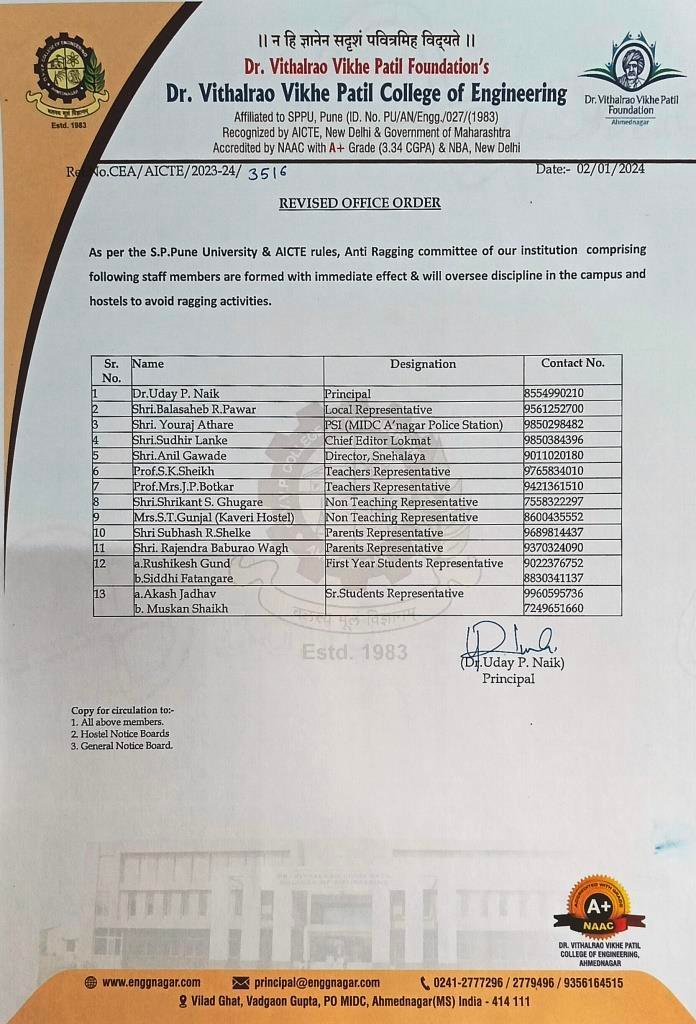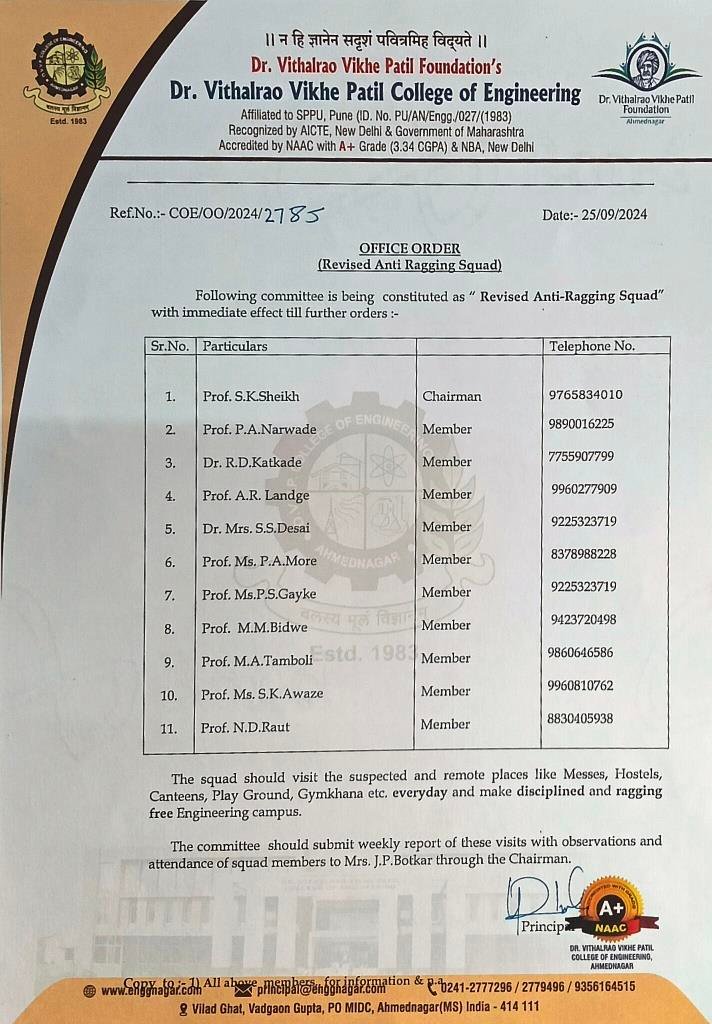
Ragging means the doing of any act which causes, or is likely to cause any physical, psychological harm of apprehension or shame or embarrassment to students and includes:
Ragging is different from other crimes because the motive is sole to get perverse pleasure. Ragging is also different from other crimes as it actively promoted by certain sections of the society.
1. Ragging is illegal and punishable in strictest and most exemplary terms as per the ruling of the Supreme Court Of India.
2. Each Student must show due respect and courtesy to the Institute teachers, administrators, officers, employees, and visitors. They must not infringe upon the rights of fellow students.
3. In the event of proceeding on proceeding on unscheduled leave on accounts of illness, family matter, etc., students must inform the Warden, faculty adviser and the concerned Head of the Department.
4.The Institute facilities/amenities such as the library, the internet, playgrounds, hostels, laboratories, and classrooms must be used responsibly. Any willful damage and misuse of the facilities/amenities constitutes an act of indiscipline.
5. In the event of an illegal activity in the campus, the institute is obligated to permit the police and judiciary intervention.
6. In the event of the student?s involvement in any activity outside the campus which is punishable by the law of the land, the institute shall in no way provide any support to them and will not be responsible either for any action.
7. All major acts of Indiscipline, which may have serious implications on the general body of students, and which may warrant a uniform and more formalized nature of the investigation, shall be handled by the Students Disciplinary Committee. Based on the recommendations of this committee with the Principal as the Chairman, the management approves the punishment recommended.
8. For an offense committed (a) in the Department or a classroom and (b)elsewhere, the Head of the Department shall have the authority to reprimand or impose fine or take any other suitable measure. All cases involving punishment other than reprimand shall be reported to the Chairman of the Standing Disciplinary Committee.
1. Suspension from attending classes and academic privileges.
2.Withholding/withdrawing scholarship/fellowship and other benefits.
3. Debarring from appearing in any test/examination or other evaluation processes.
4. Withholding results.
5. Debarring from representing the institution in any regional, national or international meet, tournament, youth festival, etc.
6. Suspension/expulsion from the hostel.
7. Cancellation of admission.
8. Rustication from the institution for period ranging from 1 to 4 semesters.
9. Expulsion from the institution and consequent debarring from admissions to any other institution for a specified period.
10. Fine ranging between Rupees 25,000/- and Rupees 1 lakh.
11. Collective punishment: When the persons committing or abetting the crime of ragging are not identified, the institution shall resort to collective punishment.
1. Creating ragging free atmosphere in and outside the campus.
2. Creating awareness among students regarding acts and punishments pertaining to ragging activities.
3. Creating cordial relations among students for fulfilling organization’s mission and objectives.
4. Creating awareness among students regarding how the self-confidence of the individual influences the national interest.